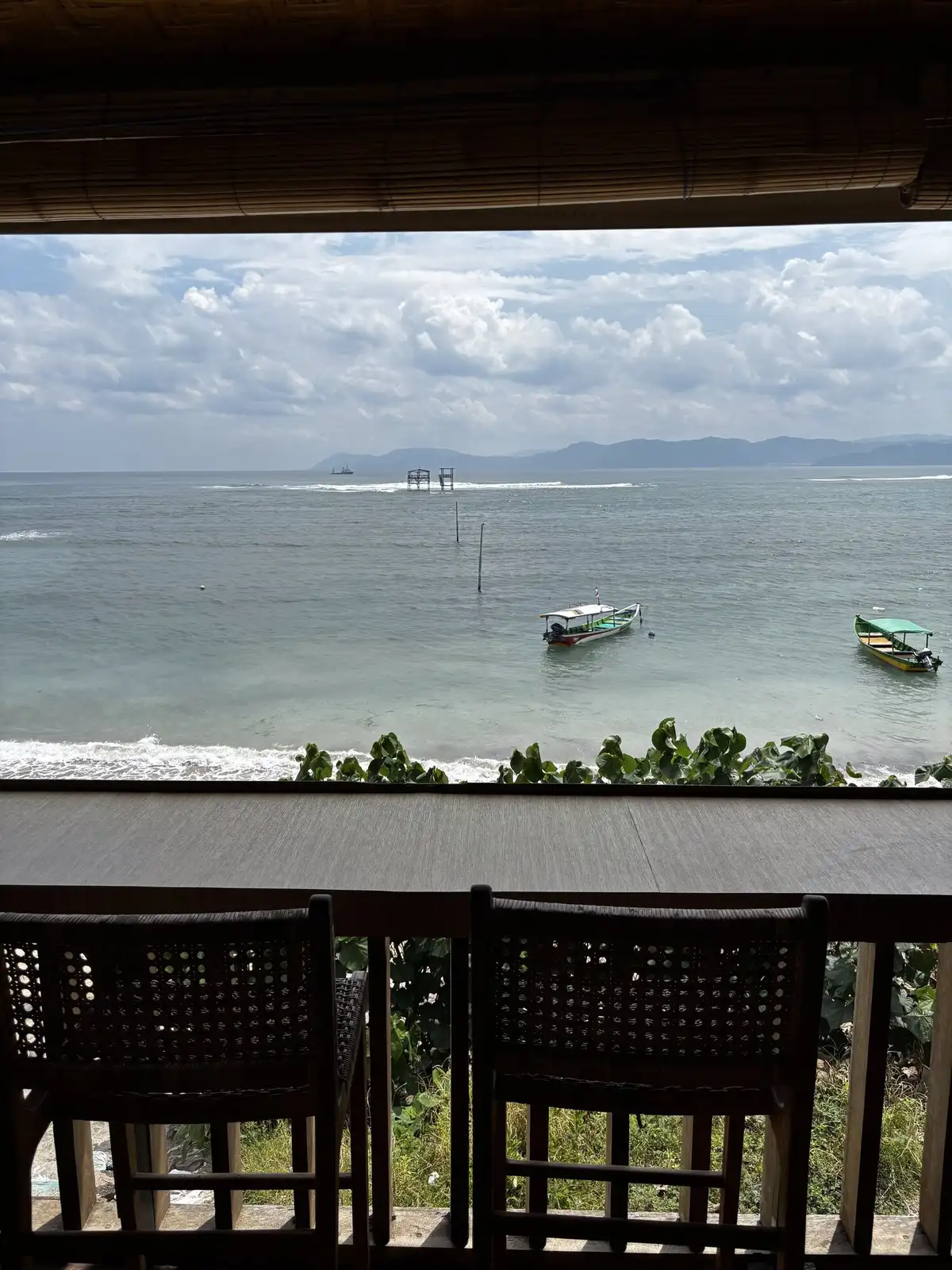
The Wave
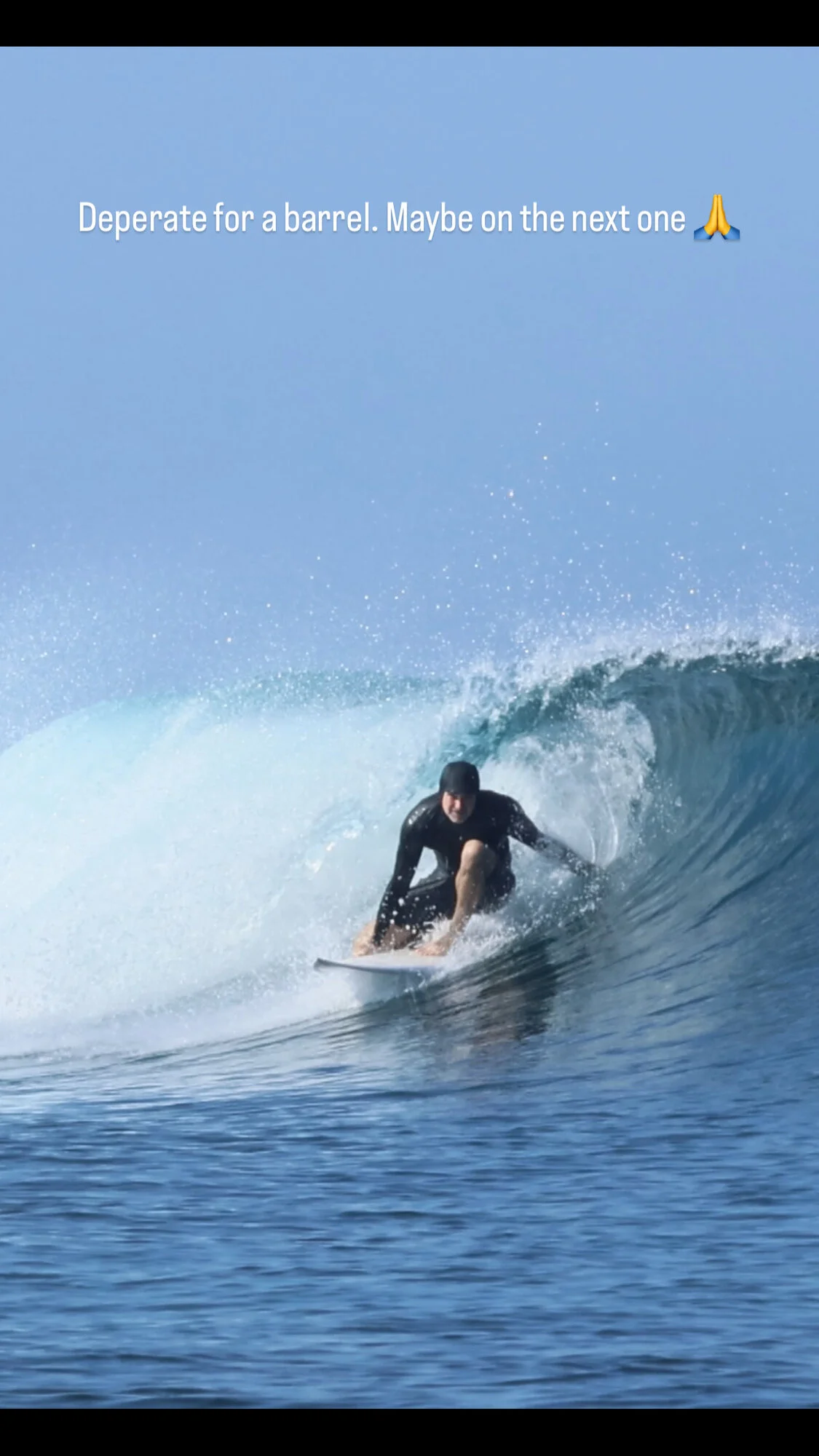
Lakey Peak is one of the most perfect waves for progression in the world. I do not say that lightly. I have surfed Fiji, Siargao, Hawaii, West Sumatra, and this place delivered more surfing, more fun, and more improvement than all of them.
The main break is an A-frame reef break that produces both a left and a right off the same peak. The left is the star. It runs for about 100 metres along the reef with a consistent wall that lets you link turns the whole way. It is quick but not too fast. You have time to set up, read the section ahead, and actually execute turns rather than just hanging on.
I am a natural footer, so the left had me surfing backside. At home I rarely get more than one or two turns on my backhand. At Lakey I was consistently getting four or five. The wave just keeps giving you sections to work with. Not too steep, not too flat. Just this running wall that lets you practice whatever you are working on.
The right is shorter. Maybe 30-40 metres. It sucks up off the reef and creates this punchy, hollow wave that is incredibly fun. Sometimes it barrels. It has a little end section that wraps around the reef where, if you are good enough, you could launch an air. For me it was one or two turns and a closeout, but those turns were powerful. The right is where I felt the wave's strength the most.
What makes the A-frame setup so good is that it splits the crowd naturally. Some surfers prefer the left, some prefer the right. On most sets, the peak splits both ways and two people can go at the same time, one on each side. That means less jostling for position and more waves for everyone. At a single-direction break, one surfer gets the wave and 15 others wait. At Lakey, two surfers go on every set wave, and the sets are so consistent that the wait between them is short.
The wave face itself has this incredible texture to it. It is not a smooth, glassy wall like you see in surf videos of Tahiti. It has little bumps and sections that change as the wave runs along the reef. Each wave is slightly different, which keeps every ride interesting even after your hundredth wave. Some sections jack up and give you a pocket to hit. Others flatten out and let you generate speed. Learning to read those sections as the wave unfolds in real time is what makes Lakey so good for progression. You are not just riding the wave passively. You are actively reading it and reacting to what it gives you, which is the kind of deliberate practice that accelerates your surfing faster than anything else I have experienced.
What a Session Feels Like
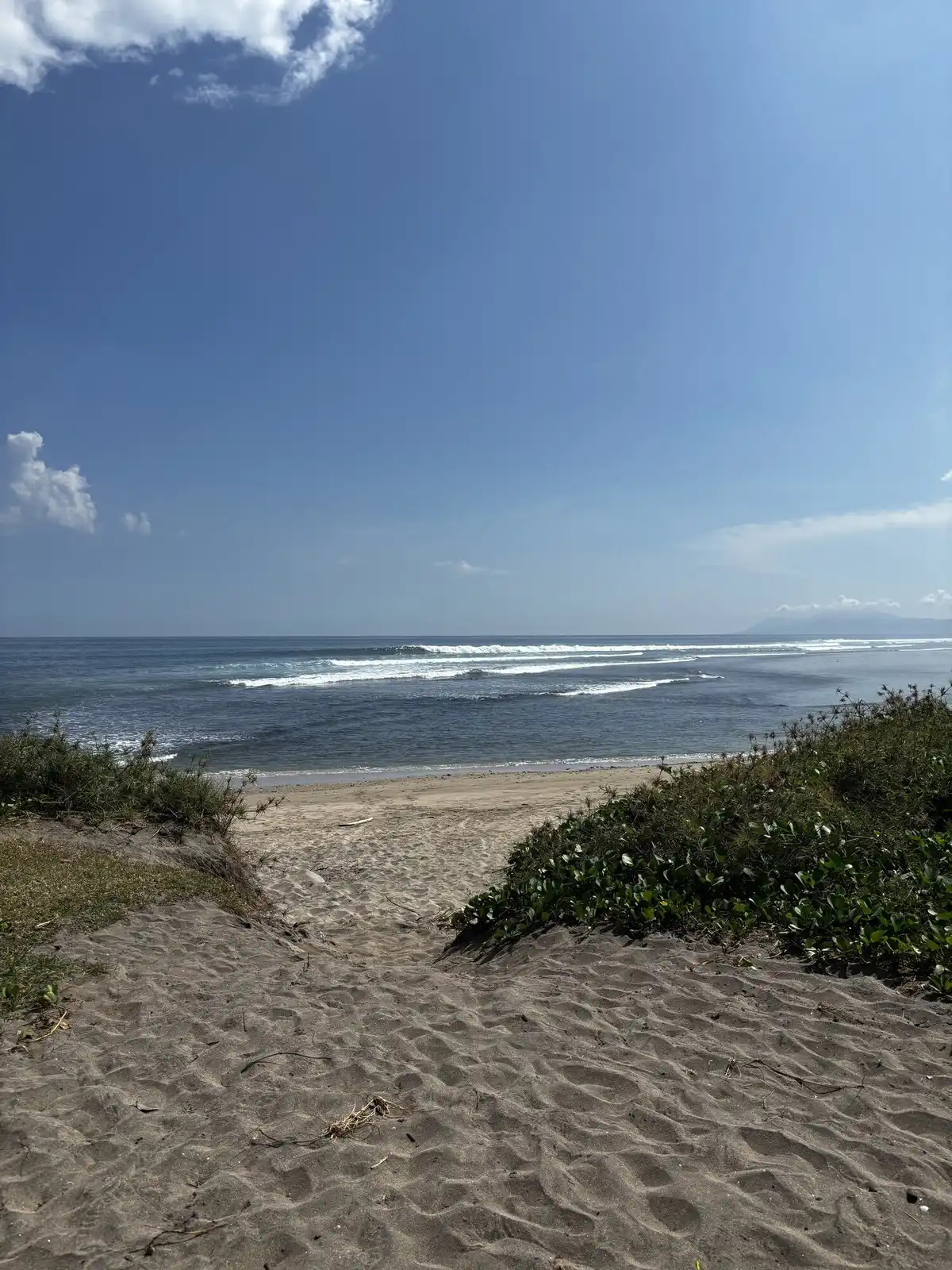
The paddle out is about 450 metres, or roughly 10 minutes. You paddle through a sandy boat channel which avoids the reef entirely. Alternatively, you can take the boat from right in front of the accommodation for a 2-minute ride out. Some mornings when my shoulders were cooked from the day before, the boat was a godsend.
Once you are out there, it is like nothing else. The sets are consistent. You are not sitting around wondering if another wave is coming. They just keep rolling through. I was tracking everything on the Dawn Patrol app and the numbers backed up what my body was telling me: I was getting 30 to 35 waves in a two and a half hour session. That is one wave every four minutes.
To put that in perspective, at Bondi on a good day I might catch 10 waves in two hours. At Lakey I was getting three times that. It felt like being on a conveyor belt. Paddle back, sit for a minute, turn and go. The lack of strong sweep helps. It is not a massive reef, so when you kick out of a wave, you are not 200 metres down the line. A short paddle gets you back to the peak.
The fatigue crept up gradually. By the end of a two and a half hour morning session, my shoulders were burning and my forearms were tight from gripping the rails through turns. But it was the good kind of tired. The kind where you paddle in grinning, knowing you just caught more waves in one session than you would in a month at home. I found myself taking the boat out on mornings when my shoulders were particularly cooked from the day before, and it was worth every rupiah.
The lineup was respectful. People were taking turns, calling each other into waves, and the general mood was just stoked. Even on busier days, the vibe stayed good. I think it is because the type of person who makes the effort to get to Sumbawa tends to be a pretty keen, pretty chilled surfer. It is not the Bali crowd. Nobody was dropping in or snaking. A few times I was paddling for a wave and someone deeper would call me off, and I would do the same for them. It felt like an unspoken code that everyone respected.
The water temperature was warm enough to surf in just board shorts and a rashie all year round. No wetsuit needed at any point. That makes a huge difference to how long you can stay in the water. At home I am in a steamer for most of the year, which restricts movement and adds fatigue. Here, it was boardies and a hooded rashie for sun protection. Freedom of movement, no overheating, no wrestling into neoprene at 6am. You just grab your board and go.
The Other Breaks
Lakey Peak is the main event, but there are several other breaks within motorbike distance that are worth exploring.
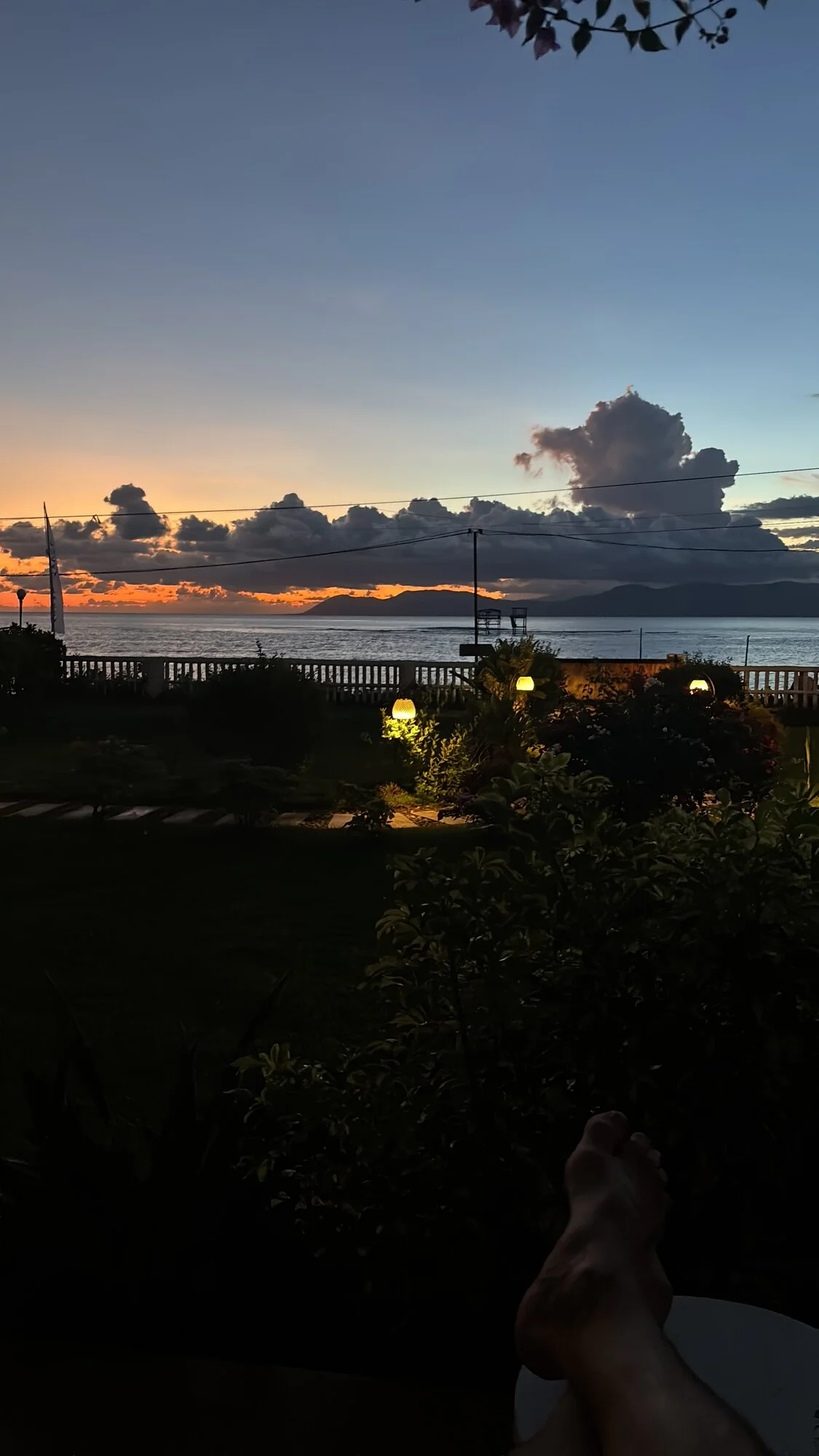
Lakey Pipe sits about 400 metres south of the main peak. It is a left-hander that is gnarlier than Lakey Peak and a favourite with bodyboarders. I surfed it one evening at sunset when it was about 2-3 foot. The wind dropped, it cleaned up, and suddenly these perfect little barrels started reeling off. I had it completely to myself. Everyone was at the main peak. In hindsight, I wish I had surfed Pipe on one of the bigger days. At 3-4 foot it would have been epic.
Periscopes is further along the coast. I surfed it but it was only about 2 foot and not really working. It needs more size to turn on. On its day it is supposed to be a quality right-hander.
Nangadoro saved a flat day. When the swell dropped at Lakey Peak, we drove up to Nangadoro and it was significantly bigger and still working. Fun right-handers with a good-looking left on the other side of the bridge. It was a great backup option and worth the ride. The wave there is a bit more raw. Less groomed than Lakey, more powerful, and the takeoff is steeper. It would not be my first choice over Lakey Peak on a good day, but when Lakey is flat, Nangadoro often has waves. We surfed there for about two hours and then rode back in time for sunset at the main peak.
Cobblestones and Nungas are other nearby breaks I saw but did not surf. The spearfishing trip took us past both of them. From the boat they looked like they could produce quality waves on the right swell. Locals told me Cobblestones is a fun right-hander that needs a bigger south swell to work properly. If I had 10 days instead of six, I would have made a point of surfing both.
Progression and Improvement
This is the part that surprised me most. I went to Lakey expecting a fun surf trip. What I got was a genuine step change in my ability. When you are catching 30+ waves a session, twice a day, for five days straight, the repetition does something to your muscle memory that a month of weekend surfs at home could never replicate.
Specific things that improved: my backhand bottom turn became more committed because I had so many reps at it. My wave selection got sharper because I was reading the reef and the incoming sets with fresh eyes every four minutes. My paddle fitness went through the roof by day three, not because I was swimming laps but because I was doing the actual movement of surfing so many times. And my confidence on steeper drops improved significantly. By day four I was taking off deeper and later than I would have dared on day one, because I had done it successfully 100 times already.
If you are an intermediate surfer looking for a trip that will genuinely improve your surfing, not just give you a holiday, Lakey Peak should be at the top of your list. The wave count alone puts it in a different category to almost any other destination.
I also noticed that surfing the same break repeatedly teaches you to read it in a way that moving between spots does not. By the end of the trip I could predict where the next wave was going to break based on the shape of the swell lines on the horizon. I knew which sections of reef produced the steepest face, where the wave fattened out, and where the end section would close out. That kind of local knowledge normally takes months to develop. At Lakey, the consistency and repetition compressed it into days. I left feeling like I understood that wave in a way I have never understood my home break, purely because of the sheer number of reps.
The Photographers
The surf photographers deserve their own mention because they are part of the Lakey Peak experience. There are a few regulars who shoot from a tower positioned in front of the peak, from boats in the channel, and from the shoreline. They capture everyone, not just the surfers who hire them. After your session, you can find them sitting at the cafes on the strip. Show them your board or describe what you were wearing, and they will scroll through the day's shots on a tablet or laptop. The quality ranges from decent to genuinely excellent. Some of these guys have been shooting Lakey for years and they know exactly where to position themselves.
I paid between 150,000 IDR (~$15 AUD / ~$10 USD) for a few shots and up to 500,000 IDR (~$50 AUD / ~$33 USD) for a larger set. Negotiation is expected but keep it respectful. These guys are out there in the sun all day doing skilled work. The photos I bought are some of the best action shots I have of my surfing, better than anything I could capture with a GoPro or Insta360 mounted on my board. If you want to budget for photos, set aside 500,000 IDR to 1 million IDR (~$50-100 AUD / ~$33-65 USD) for the week. You will not regret having professional shots of yourself surfing a world-class wave.
Beyond Surfing
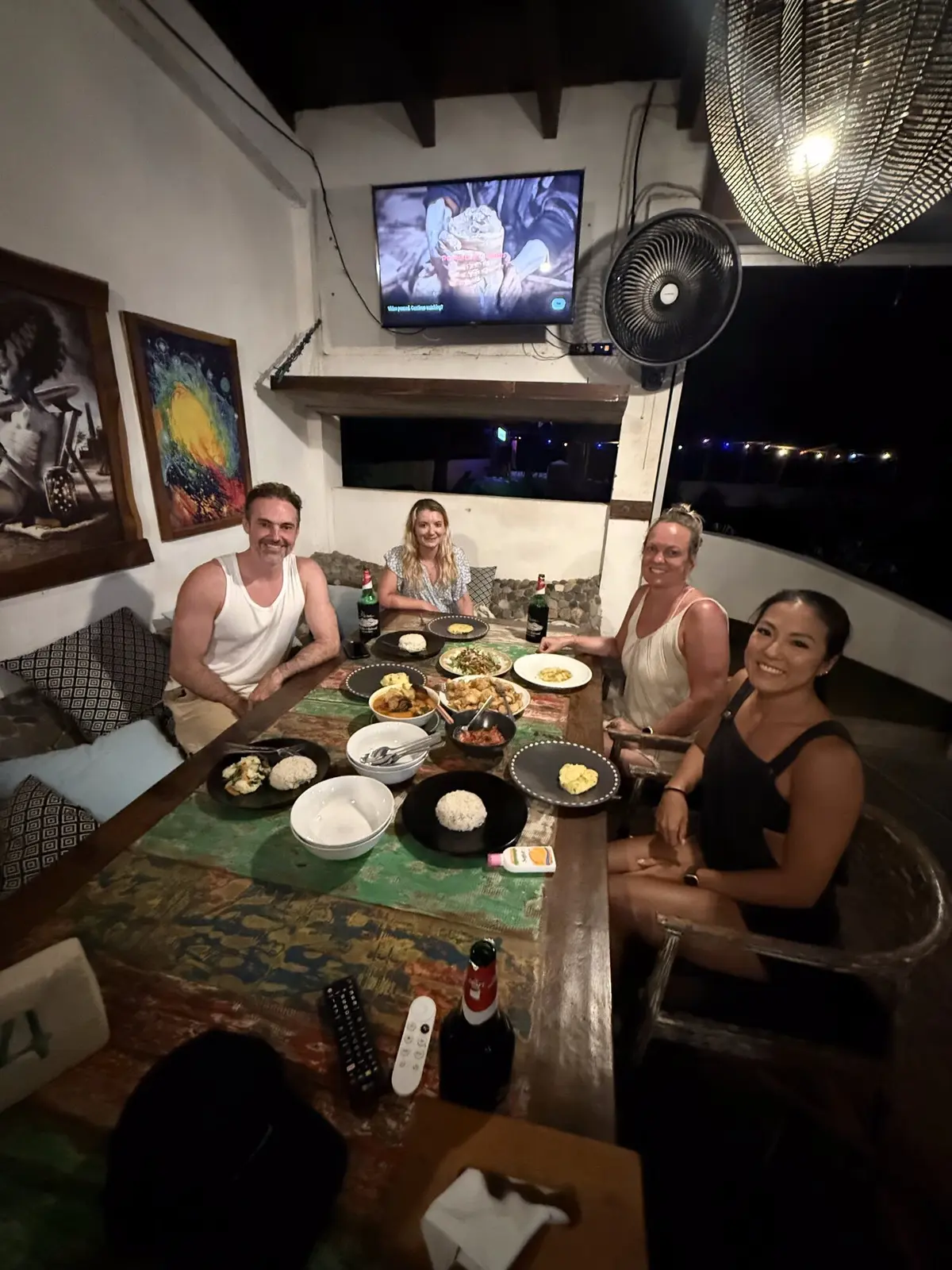
I went on a spearfishing trip organized through one of the locals. A mate organized a boat and we headed out to Cobblestones, Nungas, and Periscopes. I did not do very well. My neighbour at the accommodation, whose brother runs Three Waves Cafe, caught a bunch of fish and cooked it all up as a big barbecue that evening for everyone. That was one of the best nights of the trip. Cold beers, fresh fish, sunset, and a table full of people who had all been in the water that day.
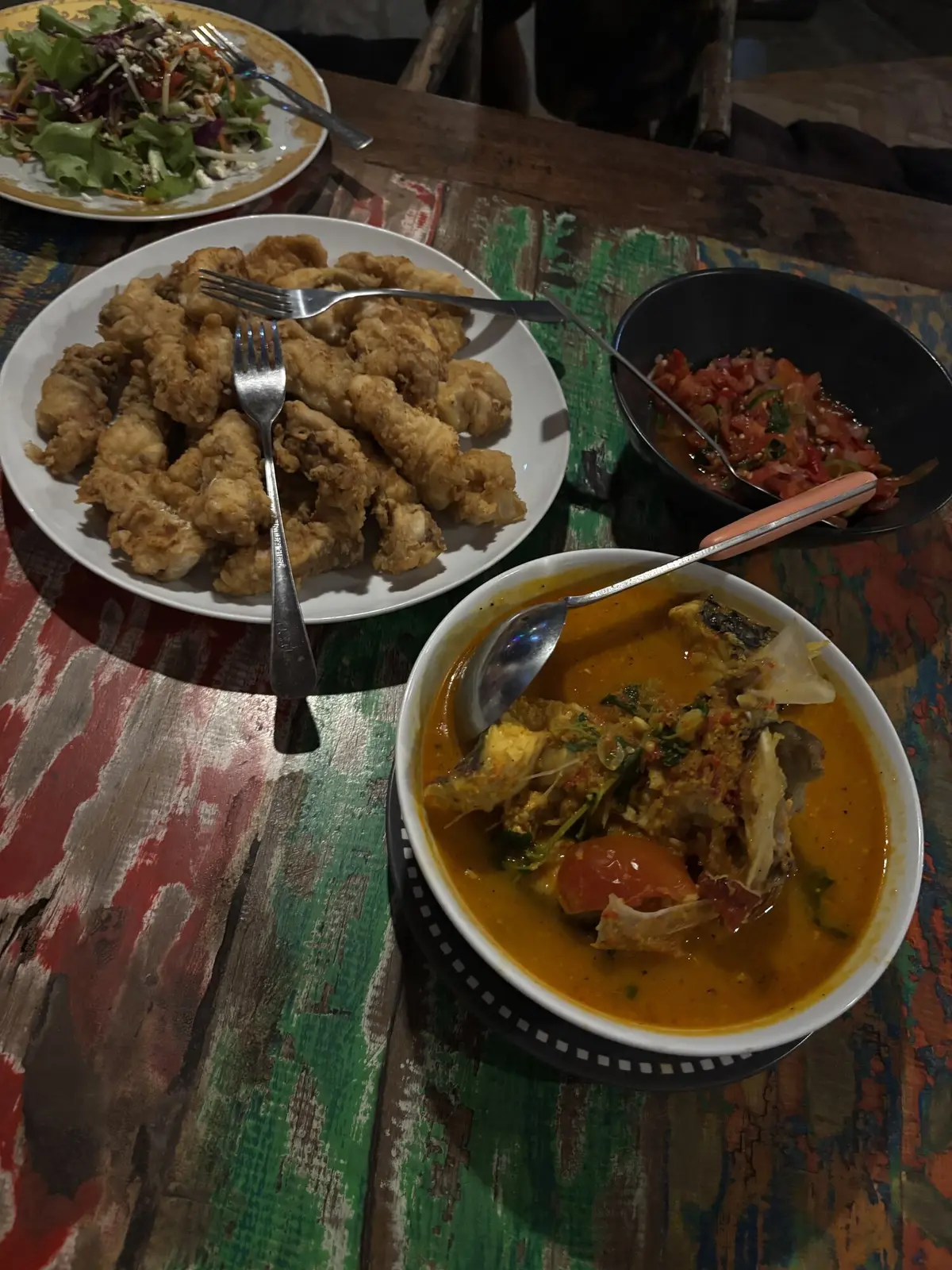
Three Waves Cafe became my go-to spot for after-surf drinks. It is right on the promenade with sunset views. Good food, good staff, solid vibe. If you are looking for somewhere to decompress after a session, start there. They had a mix of Indonesian dishes and western staples, cold Bintangs, and the kind of laid-back service where nobody rushes you. You could sit there for two hours and nobody cared. Half the restaurant was surfers recapping their sessions, working out what the tide was doing tomorrow, swapping stories.
There are also professional surf photographers working the break. They shoot from the tower in front of the wave, from the land, or from the boat. You do not need to hire them specifically. They are out there capturing everyone and you can find them afterwards at Nami's Cafe or sitting out the front of any restaurant. Show them your board or rash guard, they will pull up your photos, and you negotiate a price. I paid between $15 AUD (150,000 IDR) and $50 AUD (500,000 IDR) depending on what they captured and how many shots there were. Worth it for the memories.
The Community
The village is something special. Super friendly locals, heaps of kids out surfing every day, and a real sense of community. The surfers who come here tend to be a specific type: keen, respectful, and just genuinely excited to be there. I met Australians, French, German, Norwegian, English, and American surfers. Spent a lot of time hanging out with a German and Norwegian woman who had been to Lakey three or four times before. They knew all the spots, all the best food, all the local intel. That is the kind of knowledge you pick up just by being friendly and sharing a meal.
It was not that off the beaten track. There were people around. But it was that perfect mix of just hard enough to get to that it filtered the crowd down to people who were there for the right reasons. Nobody was there to party. Everyone was there to surf. And that created this really wholesome, positive energy that made the whole trip better.
I saw a couple of families there too. Kids swimming, learning to surf on the inside. Local kids were ripping. Watching a 10 year old kid paddle into a set wave and pull off turns that most adults would be proud of was humbling and inspiring. The local groms grew up on this wave and they surf it with a casual confidence that comes from years of repetition. I would absolutely come back with my family when my kids are old enough. The village feels safe. The beachfront strip has restaurants, a small market, and everything you need within walking distance.
The social element was one of the best parts of the trip that I did not expect going in. I figured solo travel meant eating alone and surfing alone. Instead, I was sharing meals with people every night, swapping lineups with mates I had made the day before, and genuinely feeling like part of something. By day three I knew the staff at the restaurants by name and they knew my order. It was a small community and you become part of it quickly.
New dispatches from the field
Real stories. No spam. Unsubscribe anytime.