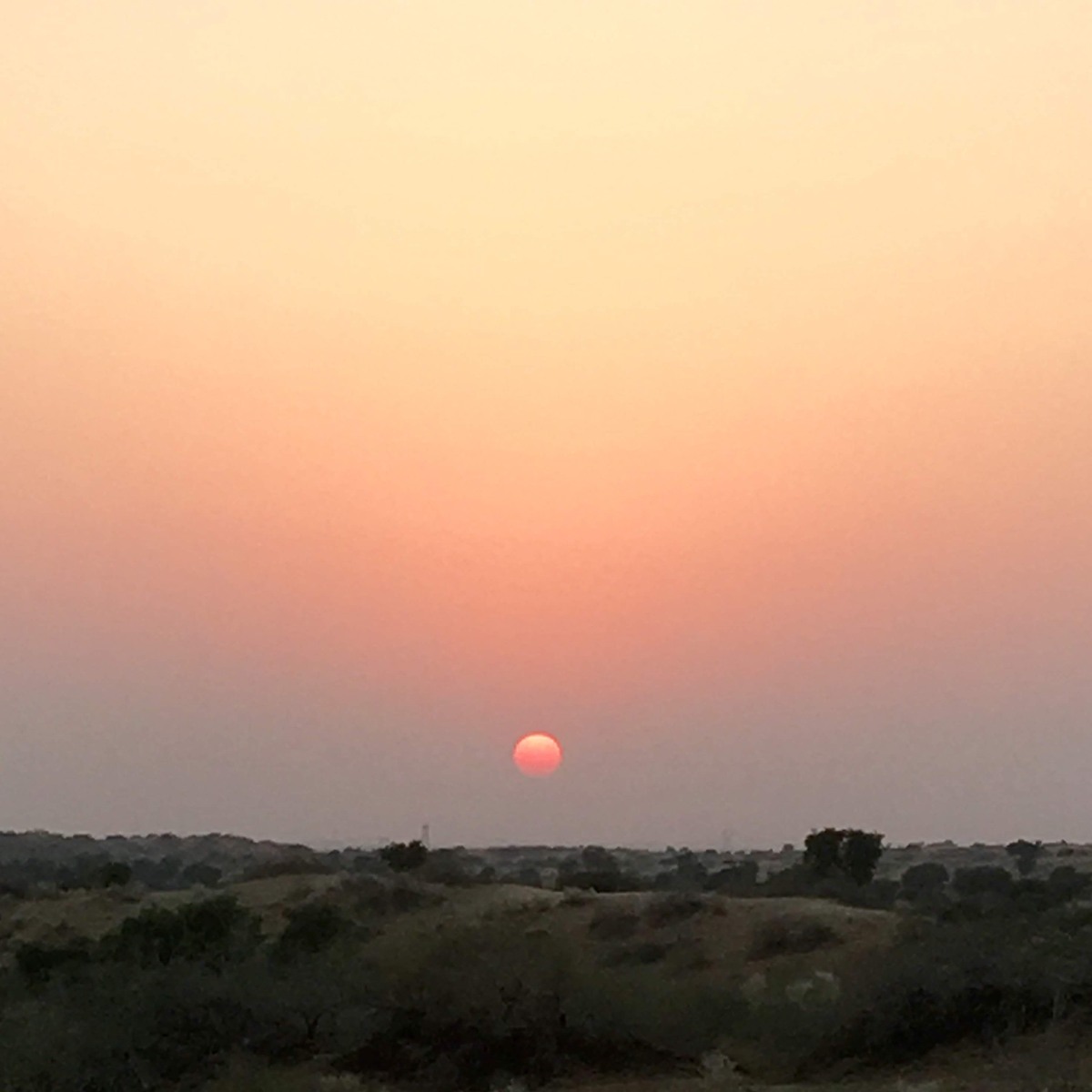
This is where Northern India stops being a destination on a map and becomes actual memory. I'm going to walk through each city honestly: the highs, the lows, the moments that caught me off guard, and the things I'm still processing years later.
Delhi's Beautiful Chaos
Delhi is overwhelming in ways that require experiencing to understand. Travel guides describe "vibrant street food" and "incredible cultural energy." What they don't mention is that you'll get honked at by auto-rickshaws at 6 AM, that the smell of diesel fumes will fill your lungs, that you'll see pigs rooting through trash next to ancient temples, that you'll lose track of time wandering through Old Delhi's narrow lanes barely wide enough for two people to pass.
But also: you'll eat the best butter chicken of your life for $2. You'll watch a Sikh family prepare langar (free meal) for 200 people at a temple with no expectation of anything in return. You'll negotiate a price with a spice merchant who treats you like a long-lost friend within minutes of meeting. You'll understand something fundamental about how humans adapt and thrive in dense, beautiful chaos.
Day one in Delhi I went straight to Chandni Chowk, the main bazaar in Old Delhi. Sensory assault: thousands of people, stalls selling everything imaginable, languages I don't recognise, smells of spice and diesel and roasting peanuts everywhere. I walked around for 3 hours just absorbing it, barely buying anything. By hour 3, my brain had recalibrated and it felt normal. That recalibration is the gift Delhi gives you. After Delhi, nothing in India shocks you.
The Food Situation (and the Consequences)
Let's be real: you're going to get sick in India. It's not a question of if, it's when. I made it 12 days before my stomach declared war.
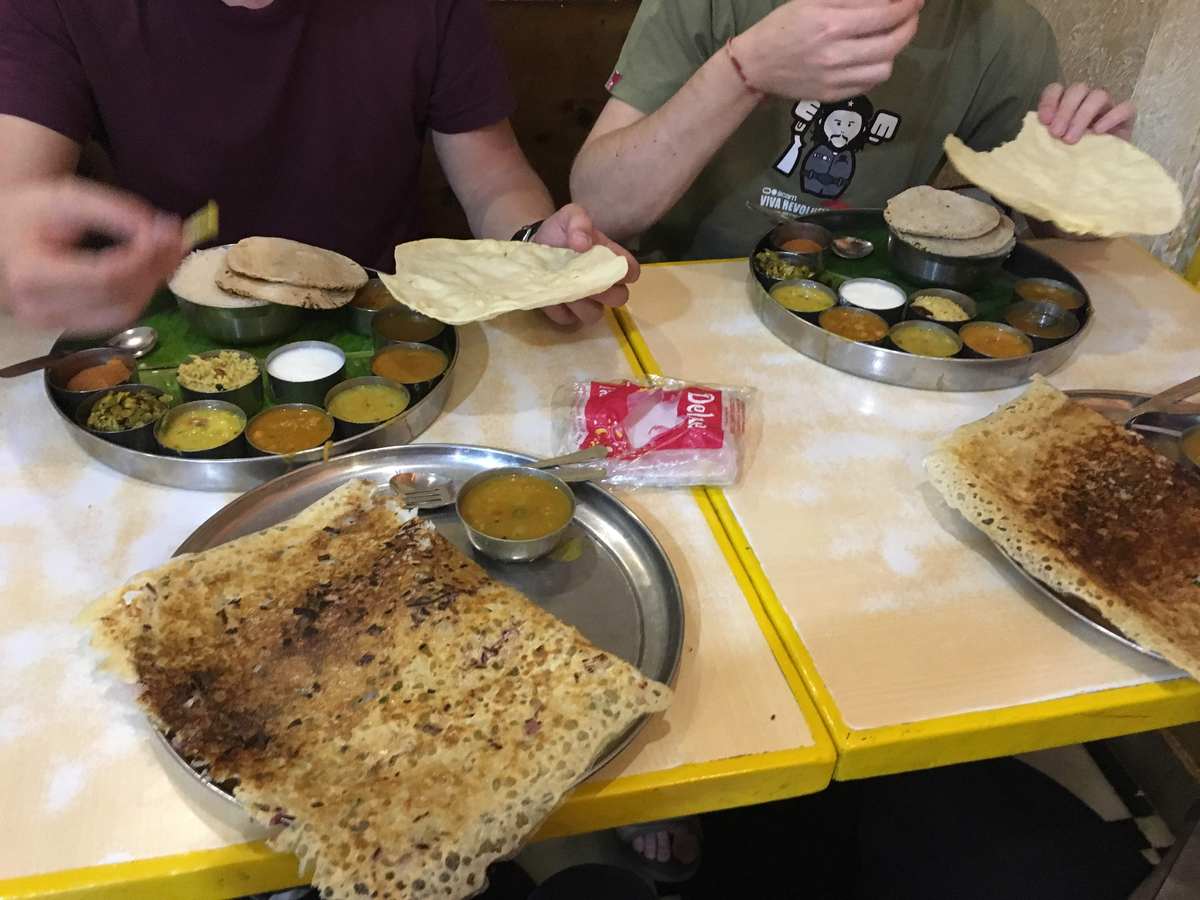
The food itself is incredible though. Butter chicken (murgh makhani) was my favourite: tender chicken in a tomato-cream sauce with just the right amount of spice, 150-200 INR ($2-3) per serve. Palak paneer (spinach and paneer cheese) became my reliable vegetarian fallback: creamy, not too heavy, less likely to upset the stomach than meat dishes, 120 INR ($1.80). Samosas were everywhere: fried triangles of potato and pea filling from street vendors for 5-10 INR ($0.07-0.15). I ate at least three daily.
Chai was basically free. Every shop, every corner, someone selling the most incredible spiced tea for 10 INR ($0.15). I drank probably 50 cups of chai over three weeks. Dosa (thin crepe from fermented rice) in South Indian restaurants, paired with sambar and coconut chutney, 80 INR ($1.20). Fresh naan from tandoor ovens, still warm, 20-40 INR per piece.
Then the water issue. I was careful: filtered water only, no ice in drinks, no salads with potentially contaminated water. And I still got sick. Day 12, my stomach decided ice cream from a freezer that may or may not have had intermittent power loss was a good idea. It wasn't. What followed was two days of the kind of sick where you exist between the bathroom and the bed. Genuinely miserable.
But I'd prepared. I had activated charcoal tablets from Australia. I took them immediately. I had Hydralyte electrolyte packets. I stayed in my guesthouse with decent bathroom access and hydrated constantly even when my stomach protested. By day 3 the acute phase was over. By day 5 I was back to normal. The charcoal tablets were a lifesaver.
Bikaner and the Rats of Karni Mata
Bikaner is small, mostly skippable as a standalone city. But it's the base for one of the most surreal experiences of the entire trip: Karni Mata Temple.
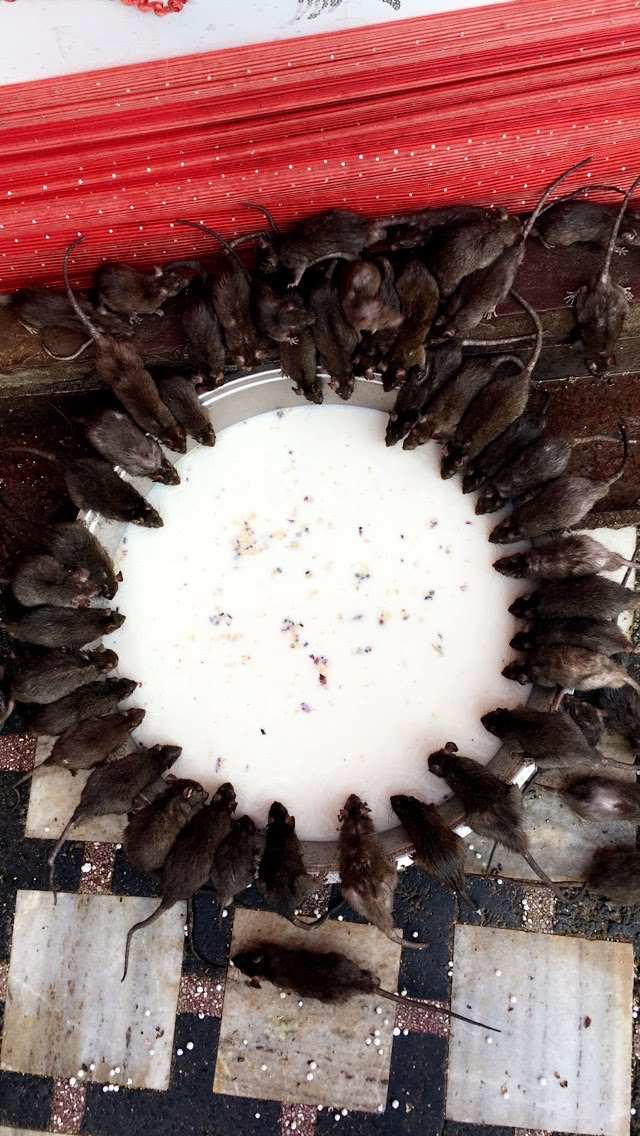
This temple is home to approximately 25,000 rats. Not metaphorically. Thousands of rats living in the temple as sacred animals. The temple venerates a goddess believed to have reincarnated as a rat, so the rats are treated as divine incarnations.
You walk through barefoot (required), the ground is covered in droppings, and there are rats everywhere. Some sit on altars. Some run across your feet. Some watch you from corners with surprising calm. It's disgusting and fascinating and absolutely not what you expect when you walk through the entrance.
The moment that stuck with me: watching a priest carefully feed a rat some blessed grain. The tenderness in his gesture, the reverence in the act, fundamentally shifted something in how I understood different cultural practices. I came in skeptical and judgmental. I left understanding that sacredness is deeply personal and culturally contextual. You don't have to agree with it. You just have to witness it honestly.
Cost of the Bikaner day trip including temple visit and local guide: $55 AUD.
Jaipur: Pink City and Amber Fort
Jaipur is famous as "Pink City," supposedly painted pink for a royal visit in 1876 and maintained that way since. Walking through, yes, lots of things are pink and terracotta. But mostly it's a bustling, modern Indian city with traffic, chaos, and incredible food.
The real experience here is Amber Fort. This massive hilltop fort overlooks Jaipur and offers views across the entire valley. You can walk up (30-40 minutes of climbing in heat) or ride an elephant. I did the elephant ride. 250 INR ($3.80). It was unforgettable: sitting on top of a massive animal, feeling tiny and ancient and awed as you climb the fort approach. On the other hand, elephant tourism is ethically complicated. These animals work long hours and the industry isn't known for animal welfare. I won't pretend I was entirely comfortable with it. But I also won't pretend the experience wasn't profound.
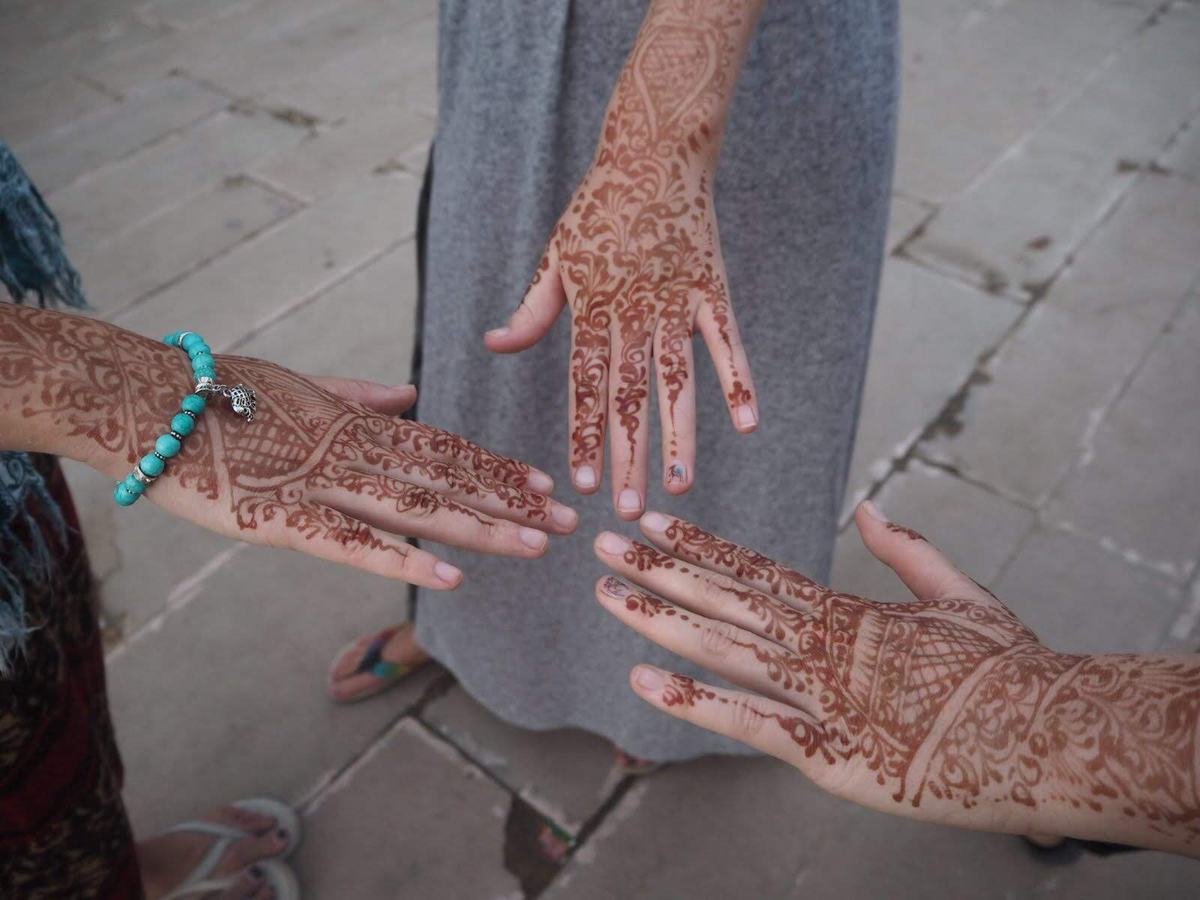
After Amber Fort, Hawa Mahal (Palace of Winds) is the other must-see: a five-story pink building with 953 tiny windows designed so royal women could observe street life without being seen. Cool photo, interesting history, 20 minutes was enough. The real gem in Jaipur is wandering the old bazaars, getting henna done (50 INR, $0.75), eating street food, and sitting in small restaurants watching life happen. That's where the city reveals itself.
Jodhpur and the 300-Metre Zipline
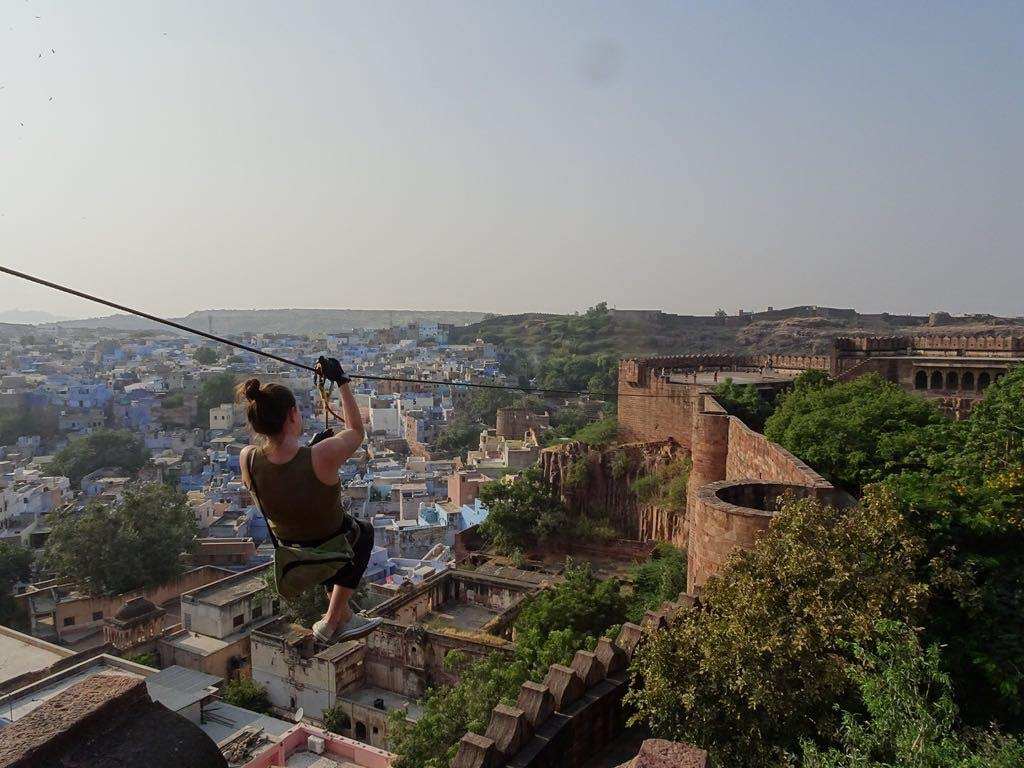
Jodhpur is "Blue City" because the old city's houses are painted deep blue (supposedly to keep them cool and repel insects). From above, it looks like a sea of blue buildings spreading across a valley below Mehrangarh Fort.
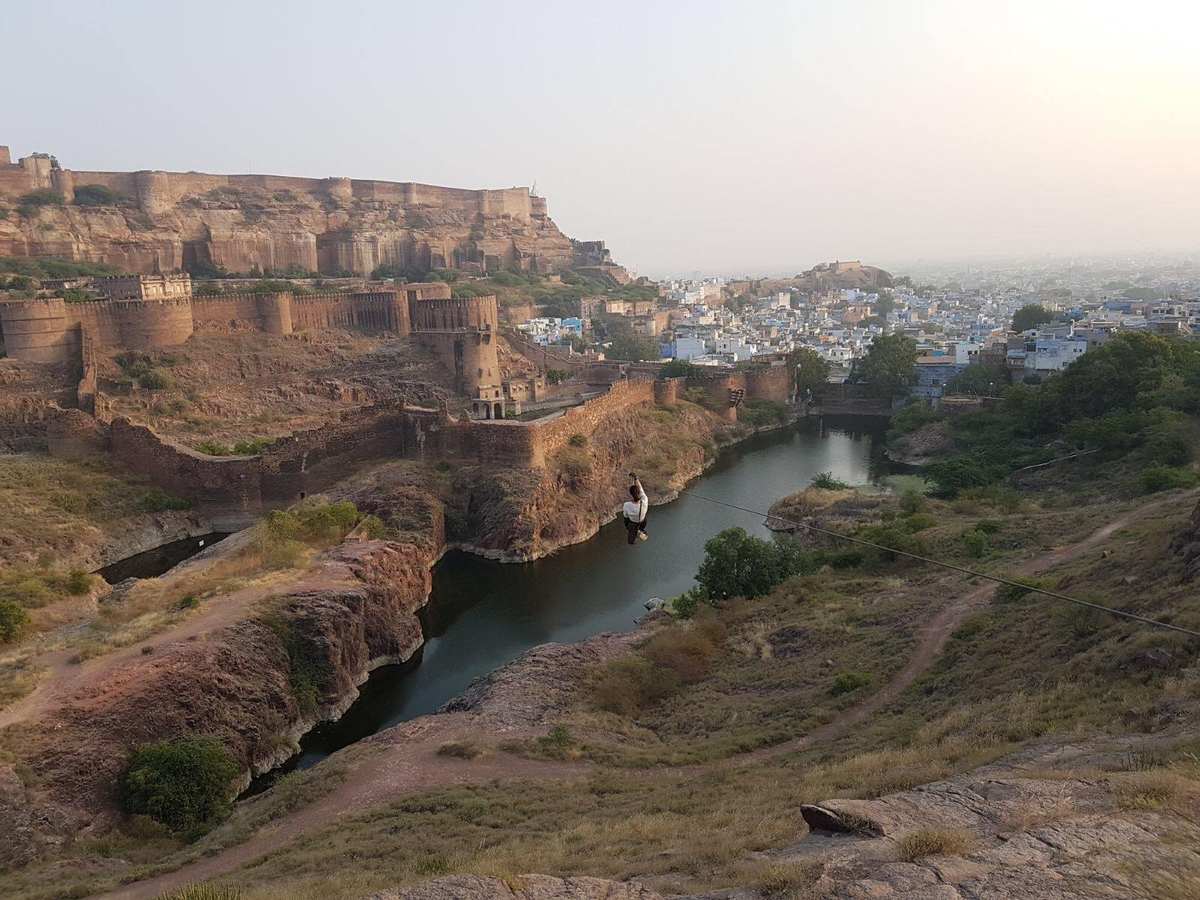
The fort itself is worth the visit: sitting on a massive rocky outcrop above the city, huge stone walls, museum inside, and views that stretch forever. But the real reason I came was the zipline. Flying Fox runs seven separate lines from the fort down to the base of the rock formation, each getting progressively longer and faster.
Line 1 was maybe 50 metres. Manageable, just enough to get your heart rate up. You get harnessed by guides who've done this a thousand times, walk to the platform, get clipped to the cable. Then you step off a rock into open air.
By line 7, you're confident. The final line is over 300 metres, the longest zipline in India at that time. The moment you launch, you're in freefall for what feels like forever. Wind rushing past, the blue city falling away beneath you, your stomach somewhere near the clouds. Twenty-three seconds of pure, uncomplicated joy. Landing is gentle (they slow you with friction on the cable) but that moment in the air is the reason people travel. 1,700 INR ($26 AUD) for the entire experience. Worth every rupee.
Jaisalmer and Desert Camping
Jaisalmer is famous for desert safaris. You hire a camel for a day or overnight trip into the Thar Desert. The overnight is worth it.
I booked through my guesthouse ($35 AUD) and it included transport to the desert, a camel for the day, dinner, overnight camping, breakfast, and the camel ride back. Everything included.
What they don't advertise: riding a camel for 8 hours is genuinely uncomfortable. Your legs ache, your sit bones hurt, there's nowhere to get comfortable. But you're riding through the actual Thar Desert. Sand dunes rising and falling in every direction. The world feeling infinite.
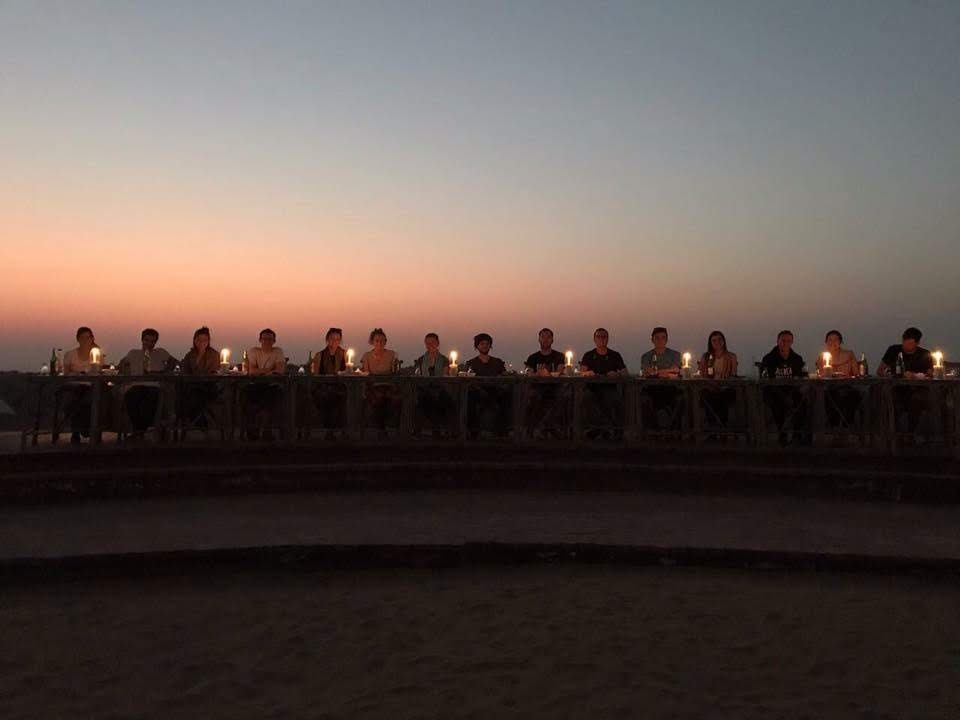
The overnight camp was under the stars on the sand. No tents, just sleeping bags. Dinner was lentils and roti and chai. I sat around a small fire with a guide and a couple from Germany, talking about why we all came to India and what we were looking for.
At 3 AM I woke up disoriented. For a moment I didn't know where I was. Then I looked up and saw the Milky Way filling the entire sky. More stars than I thought could exist. I laid there for an hour just looking up. That's the desert magic. It strips away everything unnecessary and leaves you with just the earth and sky and your own thoughts.
Udaipur and Lake Pichola
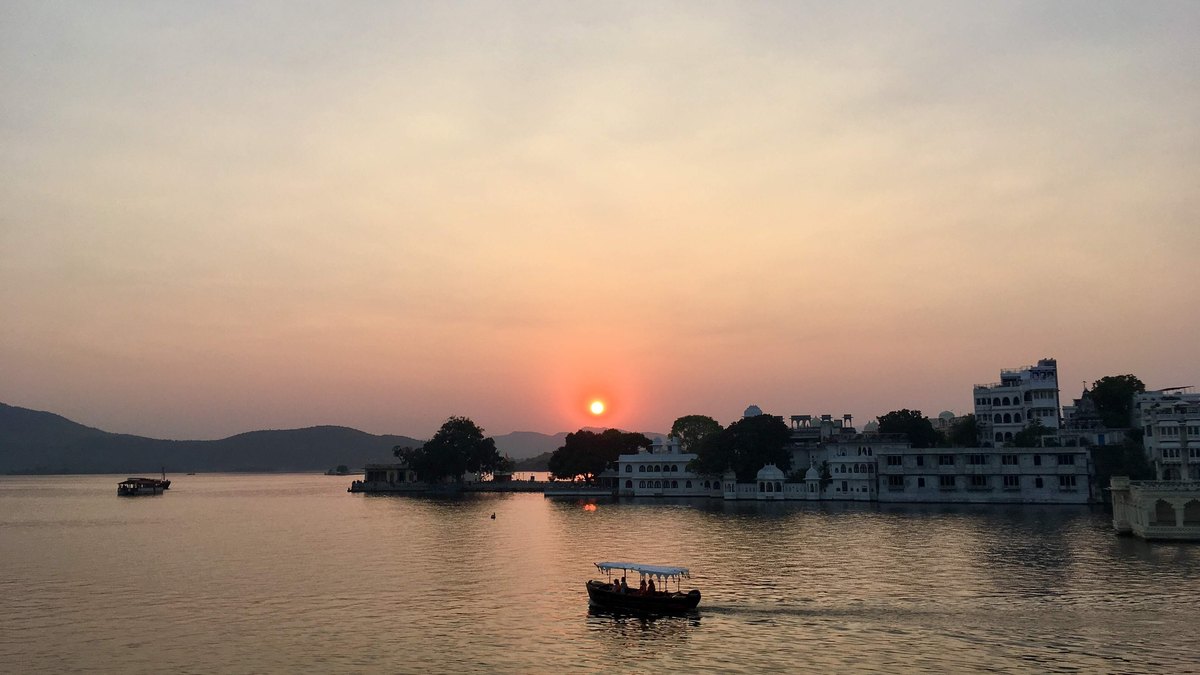
Udaipur is the only place in India I genuinely considered staying longer. Lake Pichola runs through the city, historic buildings rise from islands, everything has this romantic, dreamy quality that's completely unlike anywhere else on the route.
The city's small enough to walk, which I did constantly. Exploring the waterfront, stopping at small temples, eating at family-run restaurants, watching the sunset from a ghat. One afternoon I took a boat tour around the lake. For 200 INR ($3 AUD) I had a boat driver entirely to myself for 45 minutes. We stopped at small temples on the water, passed fishing villages, and watched the light change across the lake.
That evening, from my guesthouse roof, I ate dhal and rice and watched the city lights reflect in the water. A local musician played sitar somewhere nearby. No destination checklist required. Just being present was enough.
Varanasi and the Sacred Ganga
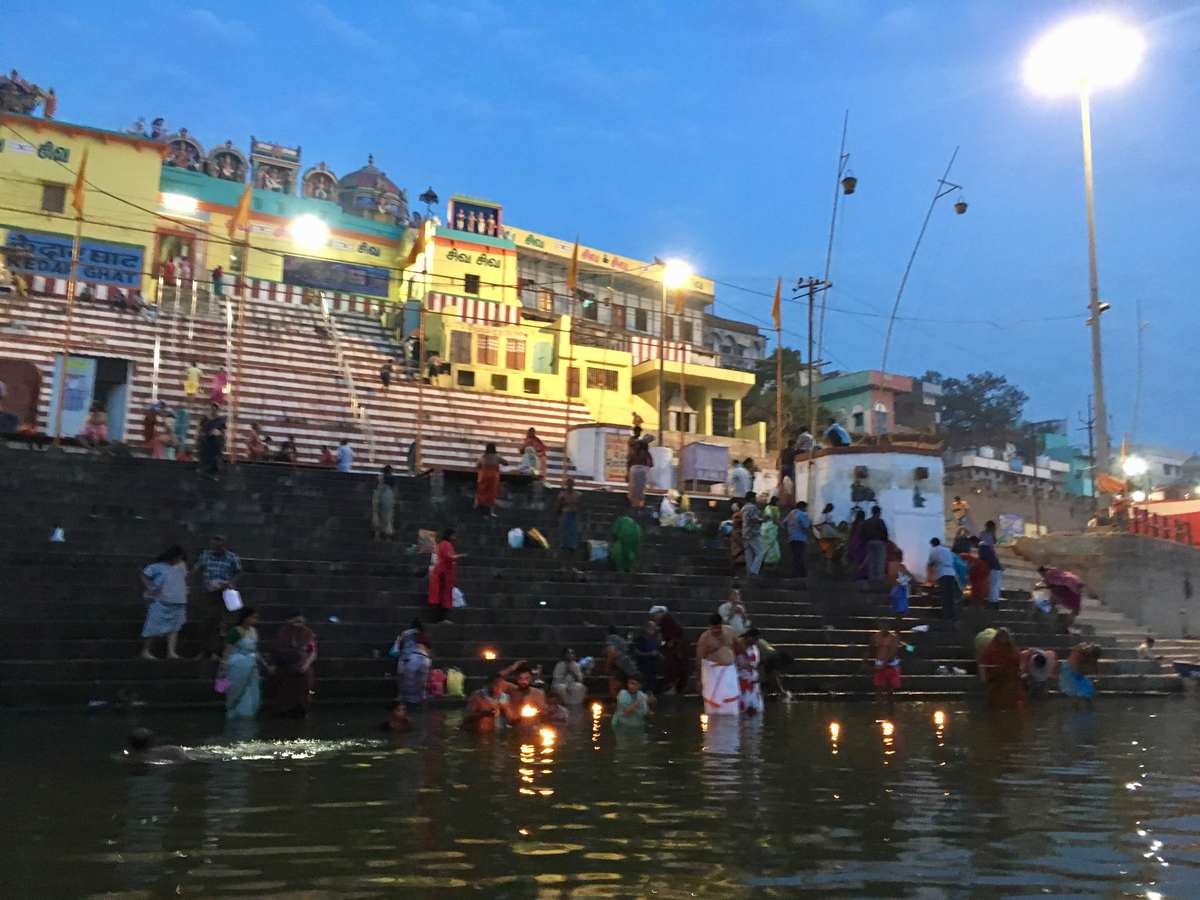
Varanasi hit differently than everywhere else. This city is built on the river Ganga, which Hindus believe is sacred. People come here to bathe in the river, to perform rituals, and at the end of their lives, to be cremated on the banks.
The Dashashwamedh Ghat is where the Aarti ceremony happens every evening. Priests light massive flames, sing sacred songs, and perform rituals for thousands of gathered people. I went at dusk, sat on the steps, and watched. The sound alone was enough to transport you. Hundreds of people, bells ringing, mantras being chanted, drums keeping rhythm. Incense thick in the air. The light turning gold and orange and red.
Upstream from the ceremony, bodies were being cremated. Families wrapped their dead in cloth, carried them to the water's edge, built fires, and burned them. The smoke rose into the same sky where priests were celebrating life. This is what pilgrims mean when they talk about meeting death and life in the same moment. I sat there trying not to cry, honestly not sure why I was emotional. Something about the combination of beauty and grief and acceptance and ritual.
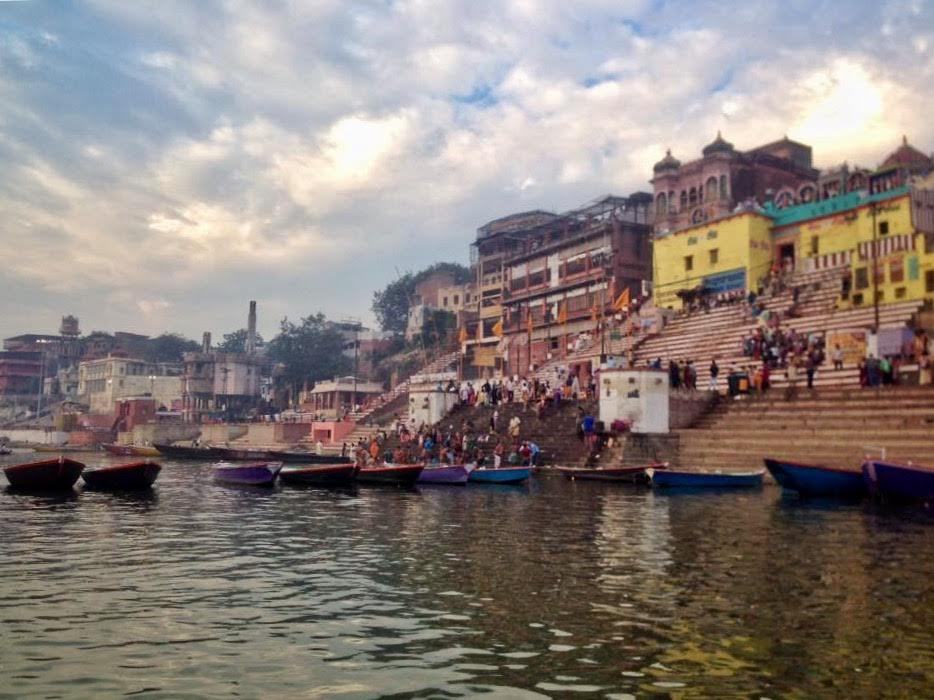
The next morning I walked the waterfront at dawn. Bathing ghats where thousands of people were in the water doing rituals, swimming, washing clothes. Incense burning everywhere. The sun turning the Ganga golden. Varanasi at dawn is the most sacred-feeling place I've ever been.
Agra and the Taj Mahal
Everyone comes to see the Taj Mahal. Expectations are impossible. Here's the thing: it's actually worth it. Yes, it's crowded. Yes, you'll be jostled by thousands of other tourists. But standing in front of it, the scale hits you differently than in any image.
It's massive. It's symmetrical in a way that feels almost unreal. The inlay work is so detailed you could spend hours tracing the marble patterns. And it was built as a tomb by an emperor for his dead wife. Something deeply romantic and tragic about that.
I went at sunrise. The light at that hour is genuinely the best: the Taj turns pink and gold and cream as the sun hits the marble. Fewer tourists at 6 AM, and the whole thing feels quieter. Book your entry ticket online in advance (saves money and skips most of the queue).
Agra is otherwise mostly a base for the Taj Mahal. There's Agra Fort (worth 2 hours, excellent Mughal architecture and views back to the Taj across the river) and the lesser-visited Itimad-ud-Daulah (sometimes called the "Baby Taj," stunning inlay work in a quieter setting). But the city itself is tourist-infrastructure heavy and lacks the charm of Rajasthan or the spiritual depth of Varanasi. Most people come for the monument and leave, and that's a reasonable strategy.
The Attention Situation
I need to mention something that doesn't fit neatly elsewhere: unsolicited attention. As a solo female traveller in India, I attracted constant attention. Stares, approaches, invitations to chai or dinners, three separate marriage proposals (each delivered with genuine seriousness), requests to take photos, and occasionally touching without permission.
Some of it was cultural (the marriage proposals were from young men who saw a foreign woman as a potential bride). Some was attention-seeking. Most was harmless, if intense. I navigated this by dressing conservatively (long pants, covered shoulders, minimal skin), travelling in public during daylight, trusting my instincts, and developing a quick response ("I'm married" plus pointing to my backpack worked surprisingly well as a fake wedding ring). Was it annoying sometimes? Yes. Was it dangerous? Not during my trip, though I was always alert and never put myself in genuinely risky situations. More detail in Tips and Warnings.
Last updated: March 2026. All costs from November 2017. The Wild Logs Team.
New dispatches from the field
Real stories. No spam. Unsubscribe anytime.