Getting to the Bottom of the World
The logistics of the South Coast Track are unusual because you can't drive there. There's no carpark. No shuttle service. No conventional trail head. You fly there. Specifically, you fly with Par Avion flights to Melaleuca, a small charter company that operates fixed-wing aircraft from Hobart to a single airstrip in the middle of nowhere.
This is the most unique part of the entire experience, and honestly, it's worth booking the whole trip just for the flight.
Getting to Hobart
Most people flying from eastern Australia will go through Jetstar or another budget carrier. I flew Jetstar from Brisbane to Hobart for approximately $500 return. The flight is about 3 hours. If you're coming from Melbourne or Sydney, it's shorter and often cheaper.
I arrived in Hobart the night before my Par Avion flight, so I booked a night near Hobart Airport. Budget $100 to $150 for a basic motel. The airport motel situation is exactly what you'd expect. Nothing fancy. The point is having a bed before you disappear for 10 days.
The next morning, I showed up at the Par Avion terminal about two hours before my flight. This matters because their terminal is tiny and genuinely delightful. There's a big map of Tasmania on the wall. There are books everywhere. The staff are accustomed to people being nervous. I was. My partner was nervous the second time. It's normal.
Par Avion: The Experience
I cannot overstate how good the Par Avion experience is. The booking was smooth. Their pricing is fixed, so there are no surprises. $700 return, full stop. The plane is a twin-engine Piper Navajo that seats about 10 people. You get allocated a specific seat, and if you book early, you can request the front seat next to the pilot.
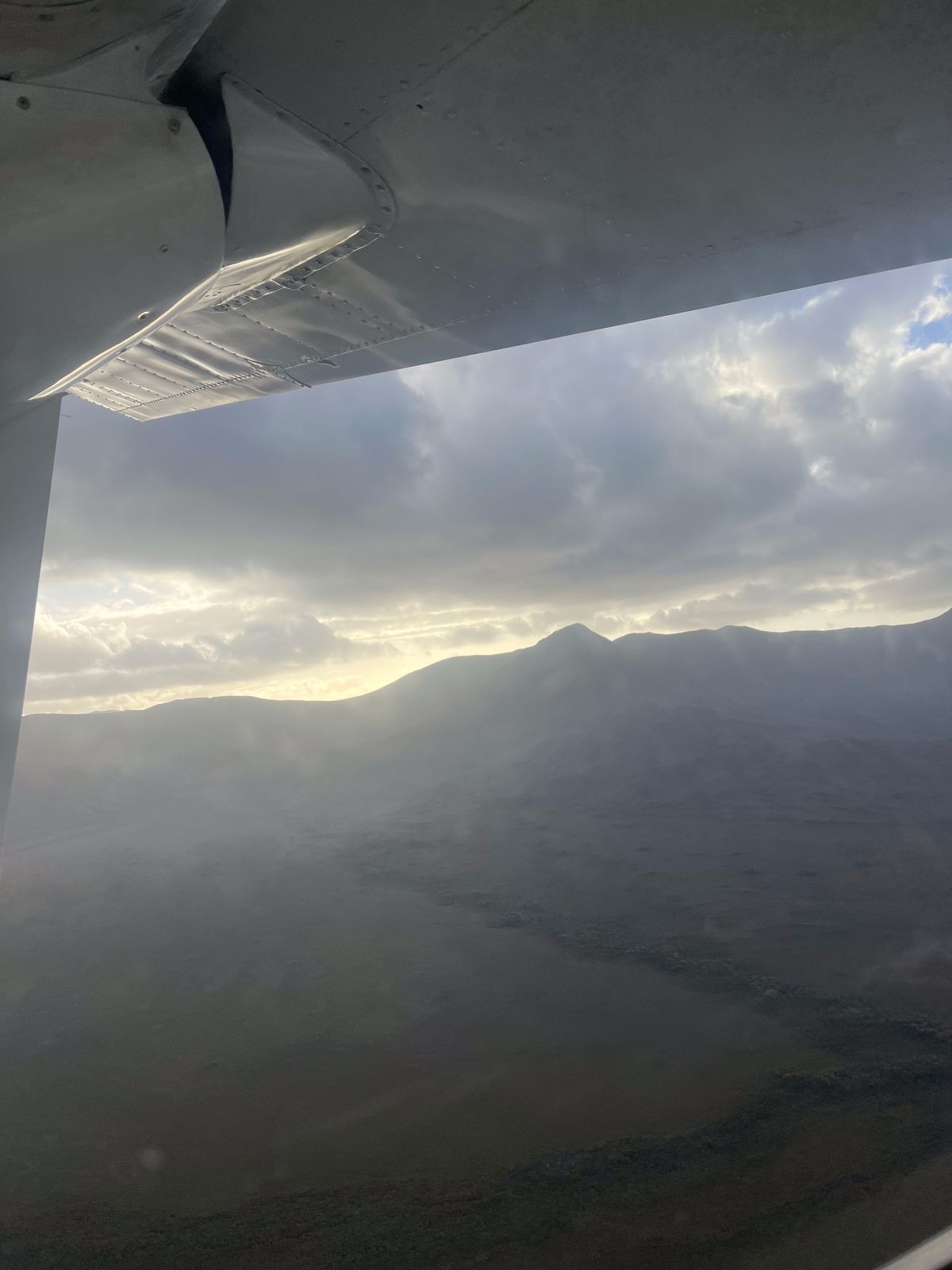
I got the front seat. On the way to Melaleuca, I sat next to the pilot for 45 minutes and watched him navigate between mountains. Tasmania from above is impossibly green and impossibly wet. You can see the rivers cutting through the valleys like scratches on a relief map. I pressed my face against the window for the full 45 minutes. You can see why the place is wild.
The flight itself is bumpy. The plane is small. There's wind. Your first instinct will be to grip the seat. By minute 10, you'll relax because the pilots have clearly done this thousands of times and they're not concerned. The shaking is normal. The wind is expected. It's fine.
The airstrip at Melaleuca is genuinely remote. It's a grass runway in the middle of nowhere. When you land, you're stepping onto a pad that's five days from the nearest road on foot, and weeks of isolation by any other measure. This is the real start of the track. This is where the wilderness begins.
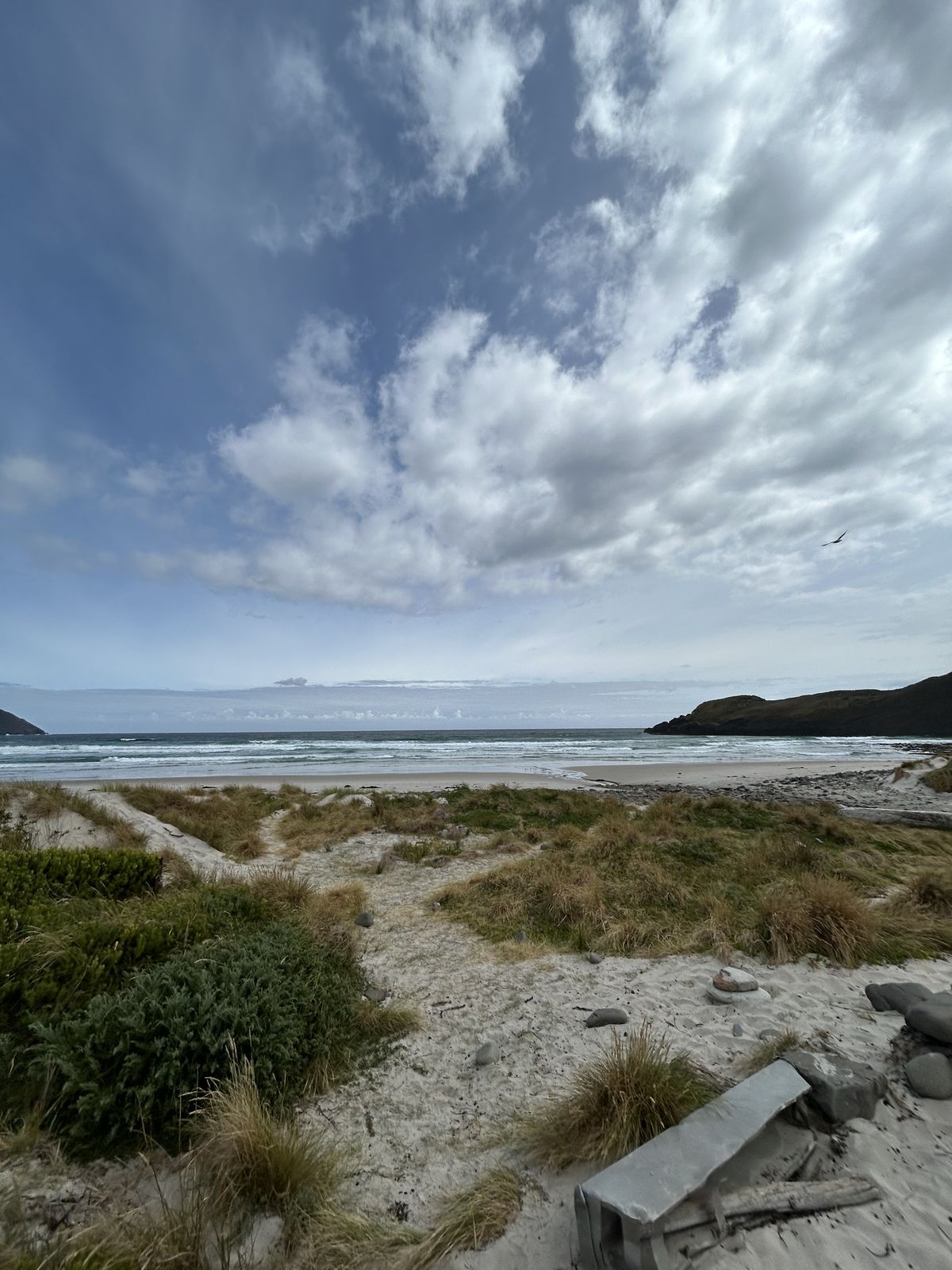
The ranger will meet you, check your pass, tell you the weather forecast, and point you towards the track start. You have the rest of the day to get organized and hopefully get a few kilometres down before camping.
Par Avion also provides your return flight, but it's flexible. You can't miss it twice. If you book for day 10 and you're not at the airstrip, the plane assumes you're in trouble and starts a search. But weather delays are expected. I've heard of people getting delayed two or three days due to storm systems coming through. This is why you don't book flights home on day 11. Plan for flexibility.
The Feeling of Arrival
Here's what nobody really explains about the South Coast Track: the moment you step off the plane, you're genuinely remote. Not camping-three-hours-from-a-town remote. Not hiking-in-a-national-park remote. Actually remote. You can't change your mind and hitch out if you hate it. You can't get emergency supplies from a town. You can't access a hospital without helicopter extraction.
This changes the psychology of the hike in a way that's hard to explain until you experience it. Every decision has actual weight. If you injure yourself and can't walk, you're in real trouble. If you run out of food, you're genuinely hungry. If the weather gets bad, you're genuinely cold and wet with no option to retreat to comfort.
The feeling walking into the wilderness on day one is isolation but not quite fear. More like stepping into a parallel world where normal rules don't apply. There's a strange peace to it. Your phone won't work. Nobody knows exactly where you are. The nearest person is possibly days away. For the first 12 hours, this is exhilarating. By hour 48, when you're cold and hungry and your tent is leaking, the appeal wears thin.
What To Expect on Arrival Day
Most people arrive at Melaleuca early afternoon. The ranger will brief you on the track conditions and the weather. Then you have the rest of the day to walk.
I'd recommend only walking 8 to 12 kilometres on day one. You're acclimating. Your pack feels heavier than it will on day three. Your body hasn't settled into the rhythm. Find a campsite, get water, set up camp before dark.
The first camp is often near the airstrip, so you might see other hikers if you're going at the same time. This is fine for mutual support but also know that the track empties out fast. By day two, you'll likely be alone.
Water is not scarce on the South Coast Track. There are streams everywhere. The Melaleuca area has abundant water. I refilled throughout the track without much trouble. Just filter or boil. Giardia is present in Tasmanian water supplies, so don't skip this step.
Weather and Season
The "dry" season (January to February) is best because mud is merely terrible instead of impossible. I hiked in January and still woke up to rain most mornings. The average temperature in January is around 18 degrees Celsius, but it regularly dips to 10 degrees or lower at night.
My first trip, I was cold. My sleeping bag was rated to 15 degrees but the actual temps were closer to 8 to 10 degrees at night. This was a mistake. The Ironbound Range section is particularly exposed. Strong winds and sleet are normal. I saw day temperatures of 12 degrees and nights that must have been lower.
The second trip with my partner was also January. Same temperature range. Same weather patterns. The rain is consistent. The wind is constant in exposed sections.
November to March is the window. April onwards, the mud becomes seriously problematic. Winter (June to August) is not realistic unless you're very experienced in cold weather hiking. People have done it, but the risk profile changes significantly.
What Happens If You Arrive When Weather Is Bad
The Par Avion pilot will communicate with the ranger before landing. If conditions are truly dangerous, they'll divert to a nearby airstrip and try again the next day. This happened to one group I heard about. They flew down, got diverted due to a storm system moving in, stayed another night in Hobart, and flew in the next morning.
This is why travel insurance is essential. World Nomads or Cover-More both cover trip delays due to weather. Budget an extra night in Hobart and a bit of flexibility into your schedule.
Money Moments
Par Avion doesn't take card payments. They take bank transfer. You need to book and pay several weeks in advance. No walkin capacity. No day-of options. This is non-negotiable. Budget accordingly.
The ranger at Melaleuca is there to help, not to take money. The track is free once you're on it.
Packing For The Flight
Par Avion has a weight limit. Your pack and everything in it gets weighed at the terminal. The limit is generous enough that most hikers won't have issues, but if you've packed heavy (25+ kilograms), it's worth double-checking before you arrive.
The plane cabin is small. Your pack goes in a luggage compartment, not on your lap. You won't have access to it during the flight. Keep anything you need for the flight (water, snacks, camera) in your pockets or a small day bag.
The flight is 45 minutes. It's not long enough to get bored but it's long enough that you'll have time to think about what you're doing. I spent the last 10 minutes of my first flight staring at the landscape getting wilder and wilder and feeling my stomach tighten. The second time, I spent it pointing things out to my partner and feeling excited rather than anxious. Same flight, different headspace.
Pre-Trip Checklist for Getting There
Before you fly, sort these out: - Par Avion booking confirmed and paid (bank transfer, weeks in advance) - Hobart accommodation booked for night before - Park pass purchased online - Travel insurance active and covering hiking activities - Emergency contact informed of your dates and the fact you'll have zero phone signal - Auto-reply set on email - Return flight home booked with at least two days buffer after your scheduled return from the track
Bottom line: the journey to the South Coast Track is half the adventure. Flying over mountains to an airstrip in the middle of nowhere is not something most people experience. The moment you land, you're committed. And that commitment is part of what makes the track itself so powerful.
New dispatches from the field
Real stories. No spam. Unsubscribe anytime.