The Bottom of the World
I was 26, freshly redundant and staring at a map of Tasmania like it might have answers. A mate had mentioned the South Coast Track in passing. Ten days. Hiking. Alone. Facing Antarctica at the bottom of the world. Sounded either brilliant or suicidal. I booked it.
That was 2020. Six years later, I've hiked the South Coast Track twice. The first time solo, shattered, with a tent from Kmart that leaked for 10 days straight and a sleeping bag rated for 15 degrees when the temps dropped much lower. The second time with my partner. I proposed after that second hike. If she could handle that, we could handle anything.
The South Coast Track isn't marketed as life-changing, but it is. Not because it's Instagram-perfect. Not because it's easy. But because after 10 days of rain, mud to your knees, cold that seeps into your bones, and isolation so complete you forget what a text message feels like, something shifts. You remember why you're actually alive.
This isn't a polished guide. This is what actually happens. The gear failures. The close calls. The moment a stick nearly went through my ribs. The weight loss from miscalculating food. Why your guidebook times are wrong. And yes, why it's absolutely worth doing.
What Is the South Coast Track?
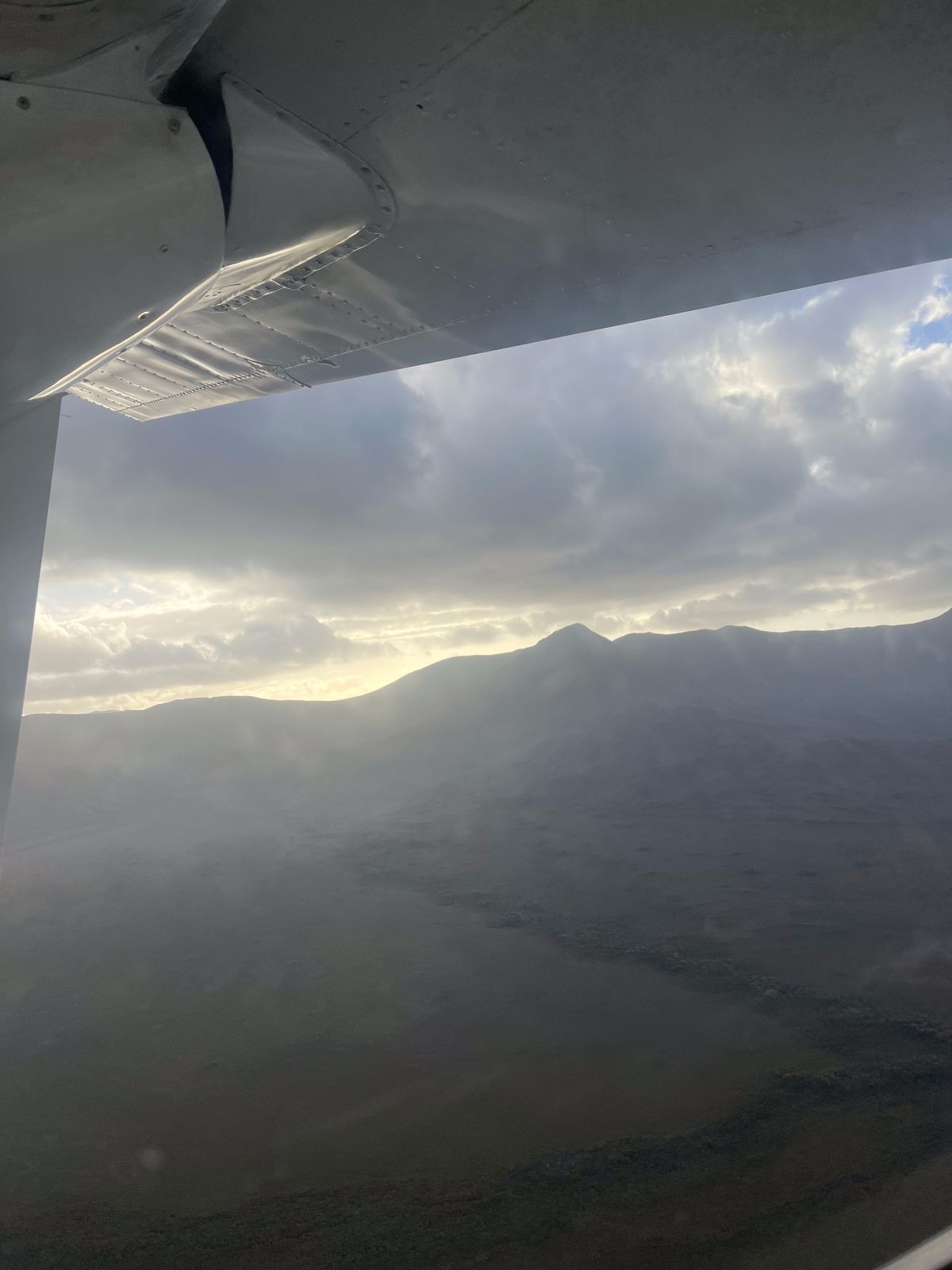
The South Coast Track is a 86-kilometre walking route along Tasmania's south-western wilderness. It runs from Melaleuca to Cockle Creek, basically from one unpaved airstrip to a road end in the middle of nowhere. Five days from the nearest road. The only way in is via fixed-wing aircraft with Par Avion, a small charter company. The only way out is the same plane, or you walk back.
The track takes 8 to 10 days depending on fitness, conditions, and how much the mud slows you down. You don't need permits. You do need respect for the place. The Tasmania Parks Service deliberately keeps it challenging. No boardwalks. No baby steps. Just a track, weather that changes in 20 minutes, and the constant possibility that you've made a serious mistake.
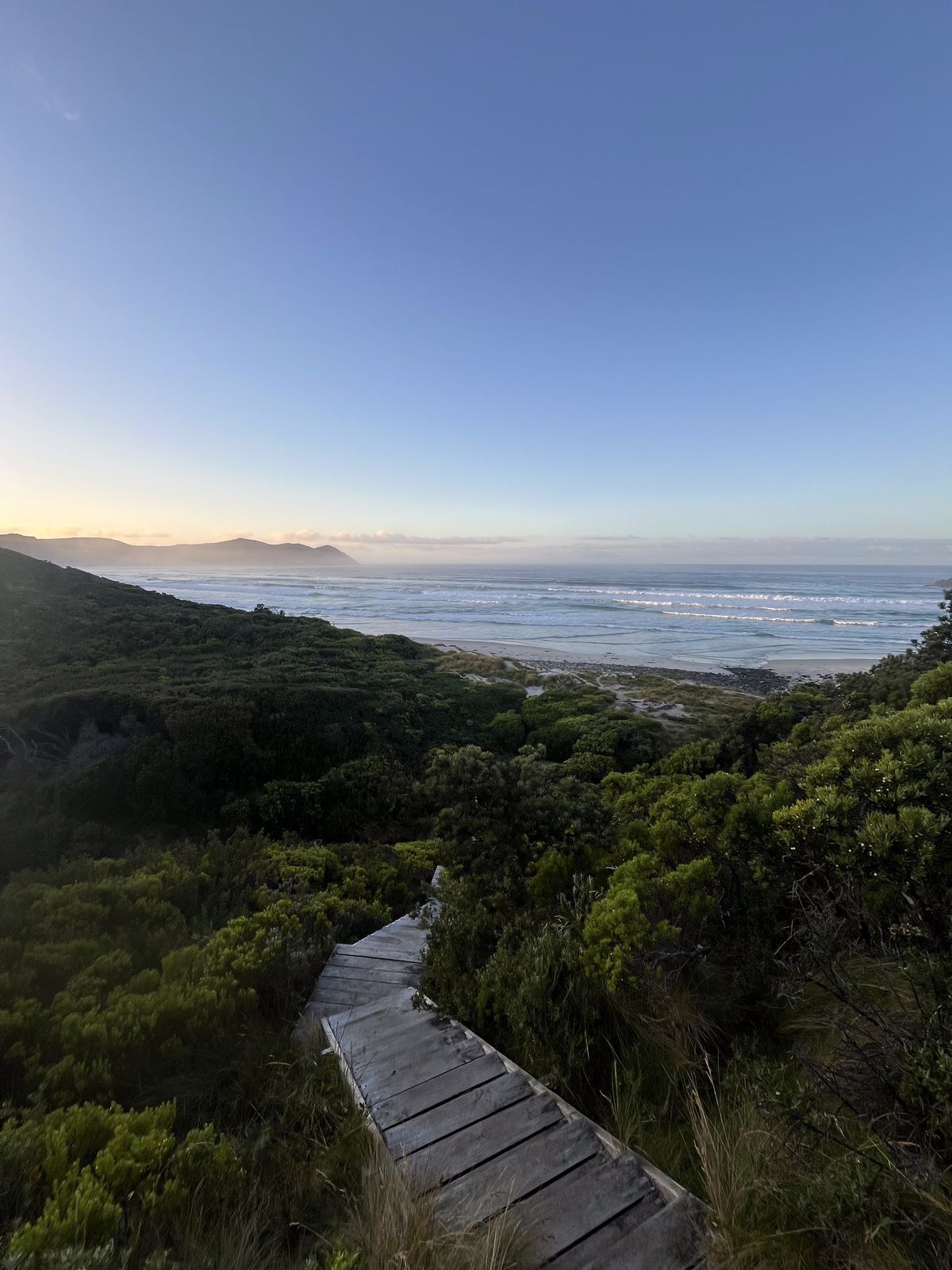
The landscape is brutal. Ironbound Range has peaks hitting 900 metres with wind strong enough to knock you sideways. Prion Beach stretches for kilometres in a perfectly straight line, and the emptiness plays tricks on your eyes. Granite Rock is legitimately dangerous, exposed sections where one slip means a serious drop. The coastal sections swing between raw granite cliffs and long beaches that look like nobody's walked them in years.
Most people do it in January or February, the dry season. I went in January 2020. Even in the "dry" season, I woke up to rain most mornings and went to sleep in drizzle. The water table is high. The mud is deep. Your boots will sink.
Why I Did It (the first time)
Breakups hit different at 26. I'd been made redundant as well, which sounds dramatic now but felt like the universe saying: everything you thought was solid isn't. So I decided to go to a hike on the bottom of the world that I'd never trained for, alone, with minimal experience in actual multi-day hiking.
I wasn't completely unprepared. I'd done overnight walks at Sundown National Park in Queensland and O'Reilly's in the mountains. But overnight walks are not the same as 10 days of incremental hell. Looking back, I should have done a proper three-day practice hike before committing to this. I didn't. Most of what I learned happened in real time, which is how you end up shivering in a leaking tent wondering if you've made the worst decision of your life.
The appeal wasn't the challenge itself. It was the reset. Ten days without phone signal. Without work emails. Without anyone knowing if I was crying in the tent because something else felt slightly bearable compared to the physical misery of being wet and cold. There's something about nature that doesn't care about your drama. A storm doesn't soften because you're heartbroken. A hike doesn't get easier because you've had a rough year. You just move through it.
And somewhere around day five, when my body had stopped complaining and started accepting the permanent state of being damp, something did shift. Not enlightenment. Not a sudden understanding of my purpose. Just a quietness. A feeling of remote isolation, like you've stepped back in time to a place where your problems genuinely don't matter because the only things that matter are food, shelter, and not falling off the mountain.
Why I Did It Again (and proposed)
Five years later, I was thinking about it constantly. My mate, now my partner, had heard the stories. The good ones and the catastrophic ones. She wanted to do it. So we booked another January trip, 2025.
The second time was completely different. Not because the track changed. Because I did. I had proper gear. I had multi-day hike experience. I knew what was coming and how to prepare for it.
And somewhere around day seven, standing on Prion Beach at sunset, I proposed. If she could voluntarily spend 10 days walking through mud, cold, and isolation with me, if she could stay cheerful when everything was wet, if she could laugh when we miscalculated the tide, then I wanted to spend the rest of my life with her.
It worked. We're getting married in October.
The Reality Check
Here's what you need to know before romanticising this: the South Coast Track is harder than it sounds. Your guidebook (probably John Chapman's, which is the standard reference) says 3 hours for sections that will take you 4 to 5 hours. The track is maintained but deliberately kept rough. The wilderness has teeth.
This isn't for beginners. The difficulty rating is usually listed as "moderate" which is technically true but misleading. Moderate under what conditions? Moderate for whom? A fit 26-year-old with supportive wilderness experience can do it. A 45-year-old who hikes weekends might struggle. Fitness matters. Gear matters. Mental preparation matters most of all.
I nearly died twice. Once on Granite Rock when I slipped. Once at South Cape Rivulet when I panicked, got lost, started running, fell down a slope, and had a stick hit my chest that slid off my rib cage. If it had been a couple more inches towards my centre, it would have gone straight through me. That's not adventure travel drama. That's what happens when you're unprepared and the mountain decides to teach you a lesson.
You should not do this track if you're not prepared and don't have the right gear. And if you are prepared, with the right mindset and equipment, it's absolutely worth doing. That's the honest answer. No qualifications, no caveats. Worth it.
The Numbers
Total cost for my first solo trip: approximately $1,000 to $2,000 depending on how much gear you already have.
If you have zero gear and are buying from scratch, budget $2,000 to $3,000. If you have basics but not proper hiking equipment, budget $1,000 to $1,500.
Breakdown: - Par Avion flights: $700 (return, non-negotiable) - Jetstar Brisbane-Hobart: $500 (approximate, varies) - Hobart pre-trip accommodation: $100 (one night) - Food for 10 days: $200 - Park pass: $50 - Gear (if buying new): $500 to $1,500+
Most of my gear investment happened early. Salomon hiking boots, a proper pack, a sleeping mat that actually insulates, dry bags, merino wool base layers. These aren't optional. They're the difference between a challenging hike and a potential hypothermia situation. I spent about $2,600 on gear for my second trip and every dollar was justified by the improvement in comfort and safety compared to my first trip with bargain gear.
Who This Guide Is For
You're reading this if you're seriously considering the South Coast Track. You've looked at the photos. You've read the basic tourism descriptions. You want to know what it's really like before you commit five figures and 10 days of your life.
I'm writing this because when I was researching it in 2020, I couldn't find real information. I found glossy tourism descriptions. I found out about Par Avion and the basics. I didn't find someone saying: "Here's what gear failed. Here's what I didn't pack that I needed. Here's the moment I nearly died. Here's why it mattered anyway."
This guide covers the cost breakdown, the getting-there process (which is unusual because flying to a remote strip is not standard travel), the actual day-by-day experience, what gear worked and what didn't, and the honest warnings.
If you're looking for inspiration to do harder things, this will be that. If you're looking for an easy hike with nice views, look elsewhere.
This is the guide I wish existed when I was 26 and googling "South Coast Track what to expect" at midnight. It would have saved me a leaking tent, a near-death experience with a stick, and about two kilograms of unnecessary fishing rod weight.
Last updated: March 2026. Costs reflect January 2025 pricing. Trail conditions based on January 2020 and January 2025 completions.
New dispatches from the field
Real stories. No spam. Unsubscribe anytime.